01
Inspect the Fireplace and Wall
Identify whether the mounting surface is drywall, plaster, brick, stone, or tile. Check for outlets, wiring, plumbing, chimney components, and hidden obstacles.


Mounting a TV above a fireplace can save space and create a clean, modern focal point in your living room. However, this installation requires more planning than mounting a TV on a standard wall. Fireplace heat, wall material, viewing height, cable routing, and the weight of the TV all need to be considered before drilling begins.
In Seattle homes, installers may encounter drywall with wood studs, brick fireplaces, stone surrounds, tile, or older plaster walls. Each surface requires a different mounting method. This guide explains how to evaluate the area, choose the right mount, avoid common mistakes, and decide when professional installation is the safer option.
Mounting a TV above a fireplace can be safe when the installation is planned around heat, wall strength, viewing height, and TV weight. The fireplace should not transfer excessive heat to the wall or directly toward the television.
The mounting bracket must also be attached to a structurally strong surface. For drywall installations, the safest approach is usually attaching the mount directly to wood studs rather than relying only on drywall anchors.
Before installation, check:
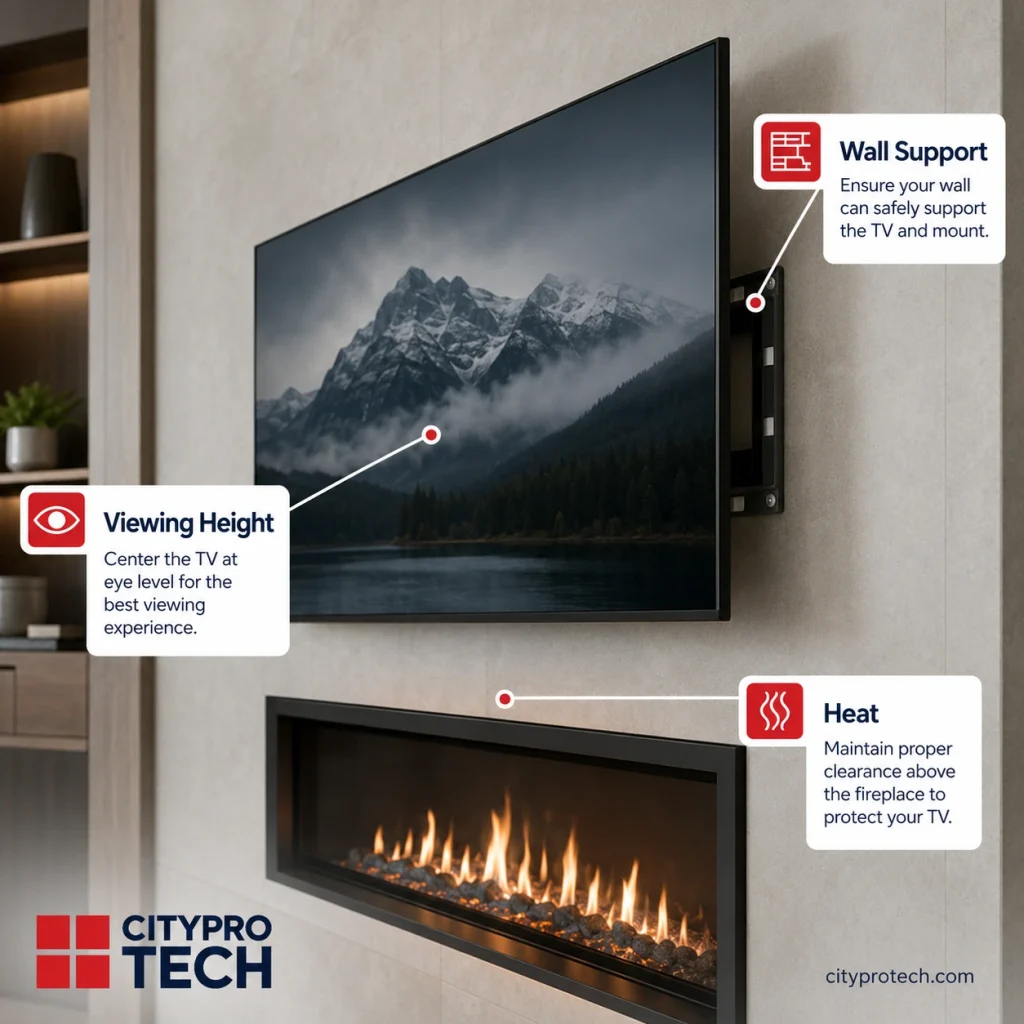
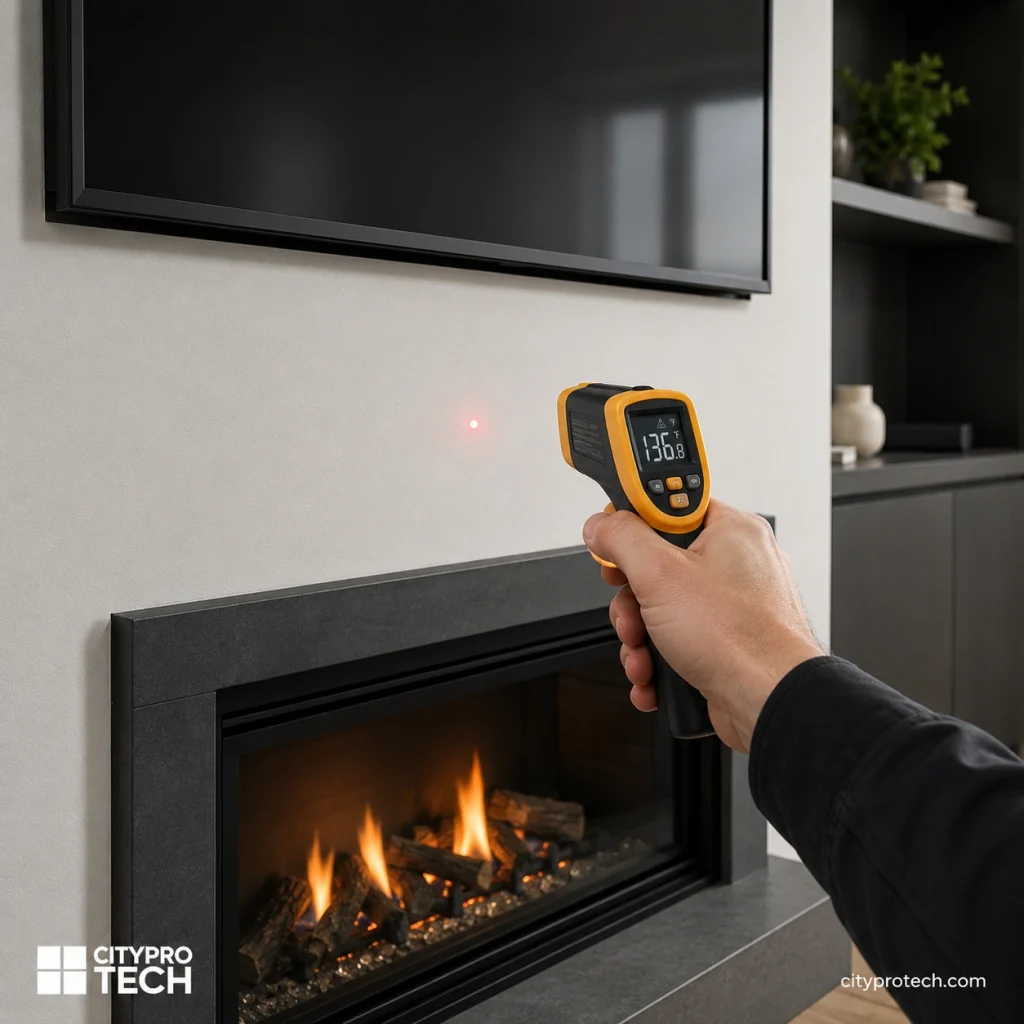
Heat is one of the most important concerns when mounting a TV above a fireplace. Excessive heat may reduce the lifespan of the television or damage internal components.
Turn on the fireplace and allow it to operate normally. Then check the temperature of the wall where the TV will be installed. A laser thermometer can provide a more accurate reading.
A mantel may help redirect some rising heat away from the television, but its effectiveness depends on its depth, position, and the fireplace design. Always review the fireplace and TV manufacturer instructions before choosing the mounting position.
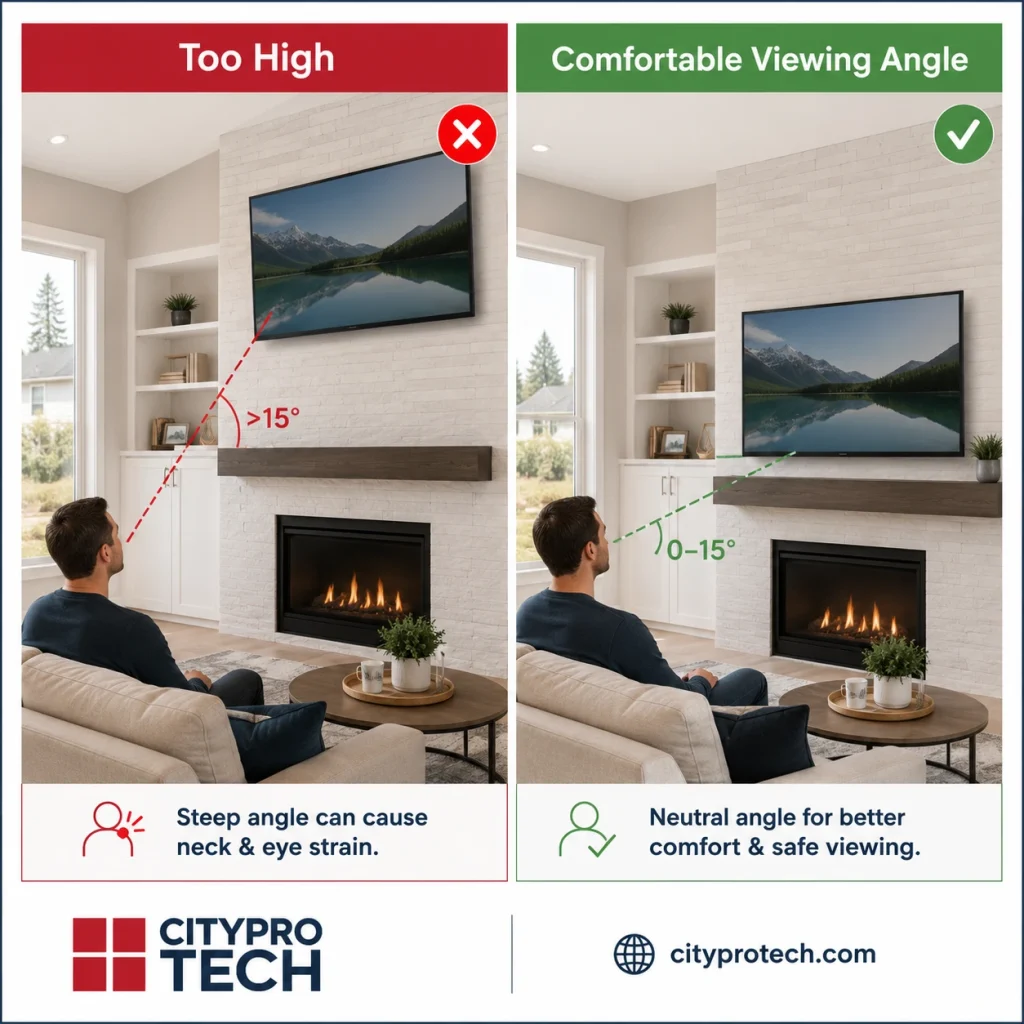
A common problem with fireplace TV installations is placing the screen too high. When the TV is positioned far above eye level, viewers may need to tilt their heads upward, which can become uncomfortable during long viewing sessions.
Sit in the main viewing position before selecting the final height. Mark the approximate center of the screen and check whether the viewing angle feels natural.
When the fireplace forces the TV to sit higher than normal, a tilting or pull-down mount may provide a more comfortable viewing angle.
Compare TV mount types to find the best option for your space.
| Mount Type | Best For | Main Benefit |
|---|---|---|
|
01
Fixed Mount
|
Low-profile installations |
✓
Keeps the TV close to the wall
|
|
02
Tilting Mount
|
TVs mounted above eye level |
✓
Improves the downward viewing angle
|
|
03
Full-Motion Mount
|
Flexible room layouts |
✓
Allows tilt, swivel, and extension
|
|
04
Pull-Down Mount
|
Fireplace installations |
✓
Brings the TV closer to eye level
|
i Important: Always confirm that the mount supports your TV’s screen size, weight, and VESA mounting pattern. Do not select a mount based only on screen size.
Follow these essential steps for a secure and properly aligned fireplace TV installation.
Identify whether the mounting surface is drywall, plaster, brick, stone, or tile. Check for outlets, wiring, plumbing, chimney components, and hidden obstacles.
Use a reliable stud finder and mark both edges of each stud. Heavy TVs should not normally be supported only by standard drywall anchors.
Outline the TV dimensions with painter’s tape. Sit in the main viewing position and confirm that the height and angle feel comfortable.
Confirm the mount’s weight rating and VESA compatibility. Position the wall plate over the studs and check it with a level.
Use the correct drill bit for the wall material. Brick, stone, tile, plaster, and wood studs require different tools and fasteners.
Secure the wall plate with hardware recommended for the mounting surface. Tighten the bolts evenly without overtightening them.
Place the TV screen-down on a clean padded surface. Attach the mounting arms using the correct screws and spacers.
Use two people for larger televisions. Lift carefully, connect the TV to the wall plate, and engage all safety locks.
Check the television with a level and adjust the tilt or swivel. Confirm that the screen is stable and does not shift.
Safety Reminder: Large TVs and fireplace installations may require two people, specialized tools, and professional wall inspection.
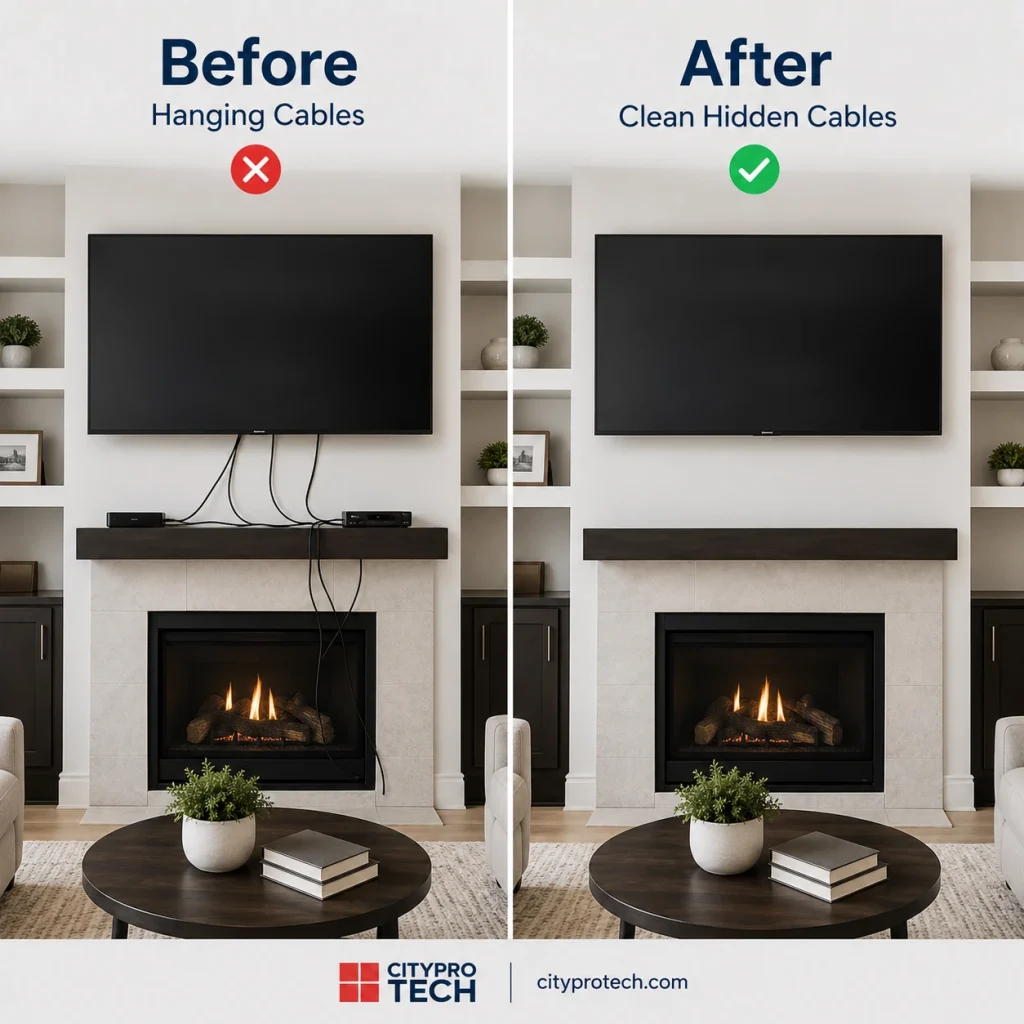
Cable management should be planned before the TV is mounted. Decide where the power outlet, HDMI cables, streaming devices, soundbar, and other equipment will be located.
Common cable-management options include:
Power cables and extension cords should not be placed inside the wall unless they are specifically approved for that application.
Seattle homes can include a wide range of construction styles. Newer homes may use standard drywall and wood framing, while older properties may have plaster, brick chimneys, masonry fireplaces, or remodeled walls.
Before installation, consider:
For apartment or condominium installations, review the building rules before drilling. Some properties may restrict modifications to shared walls, fireplace structures, or electrical systems.
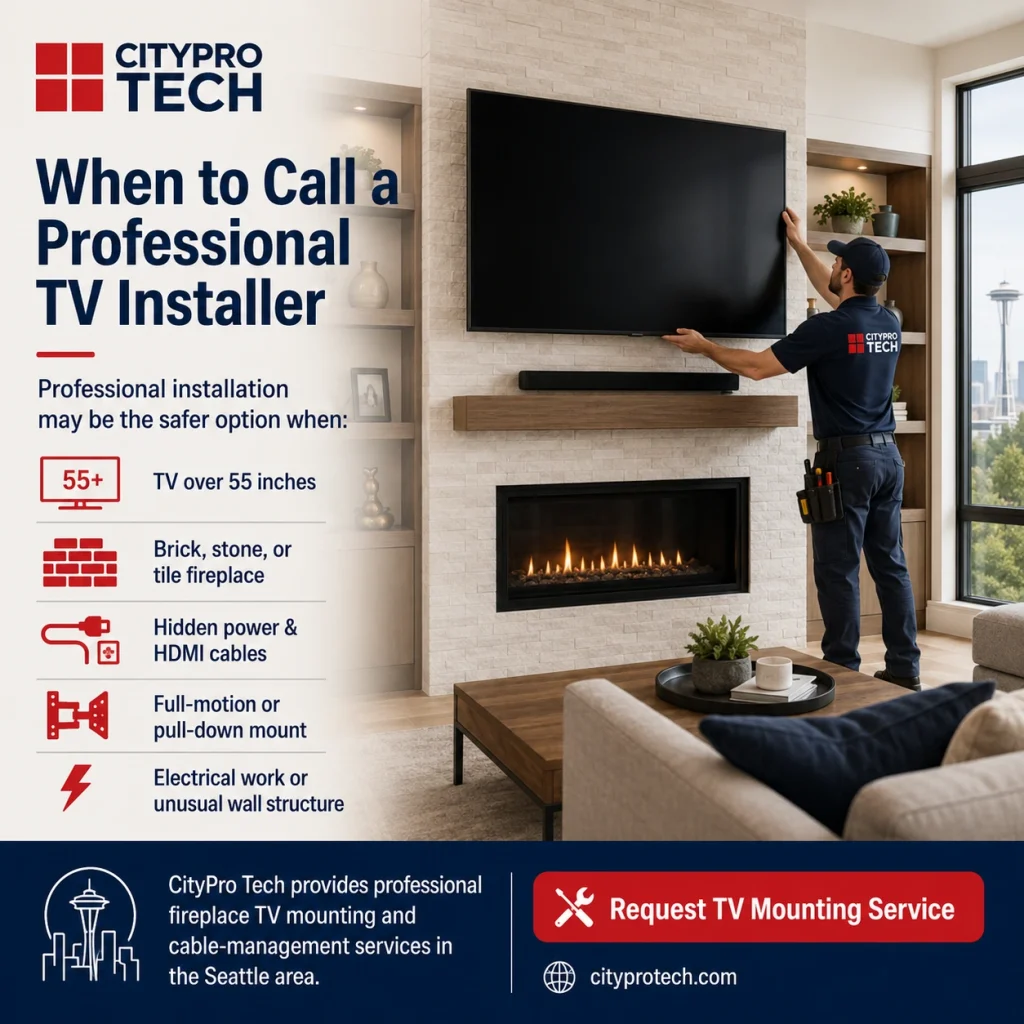
Professional installation may be the safer option when:
- The TV is larger than 55 inches
- The TV or mount is particularly heavy
- The fireplace is surrounded by brick, stone, or tile
- The wall structure cannot be identified
- A full-motion or pull-down mount is being installed
- Power and HDMI cables need to be hidden
- The wall may contain a chimney or unusual framing
- The installation requires electrical work
- The TV needs to be mounted unusually high
Excessive heat may affect a television’s internal components and shorten its lifespan. The wall temperature and fireplace airflow should be checked before installation.
The correct height depends on the mantel, fireplace design, seating distance, and viewing angle. The TV should be installed as low as safely possible while respecting heat and clearance requirements.
A tilting mount can improve the viewing angle when the television is positioned above eye level.
Yes, but the installation requires suitable drill bits, anchors, mounting hardware, and an evaluation of the surface condition.
Wires may be concealed using an in-wall cable system, recessed media box, surface raceway, or nearby cabinet, depending on the wall and fireplace structure.
Professional installation is recommended when the TV is large, the wall material is difficult, cables need to be concealed, or the wall structure is uncertain.
For safe and professional TV mounting in Seattle, contact our expert team today. We provide clean, secure, and same-day installation services.